

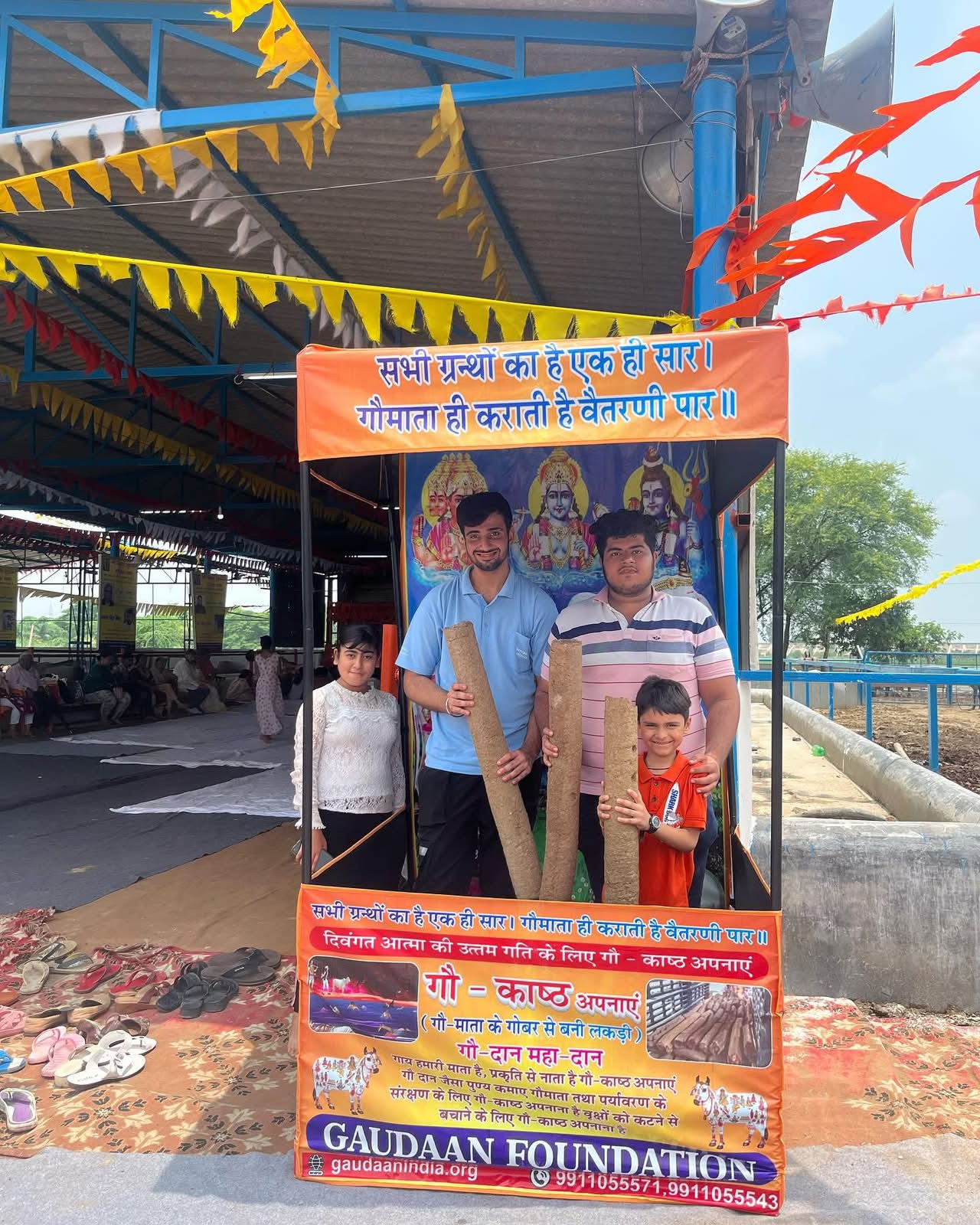
New Delhi, June 15, 2026: Gaudaan Foundation has submitted a detailed representation to key government and regulatory authorities seeking the implementation of a comprehensive Gaukasth (cow dung logs) cremation policy across Delhi, along with measures to strengthen the financial sustainability and management of Gaushalas (cow shelters).
The representation has been submitted pursuant to the Order dated 20 May 2026 passed by the Hon’ble High Court of Delhi in W.P.(C) No. 6998/2026, Ajay Kumar Gakhar v. Union of India & Others, which granted liberty to the petitioner to approach the concerned authorities with detailed recommendations.
This is partial win that court has accepted it as good suggestion, ordered to give representation and make obligatory to MCD & others to respond petitioner in writing.
Speaking on the initiative, Ajay Kumar Gakhar, Trustee of Gaudaan Foundation, stated that Delhi faces two interconnected challenges—environmental degradation caused by large-scale consumption of firewood in cremations and the growing burden of unmanaged cattle waste coupled with the financial distress of Gaushalas. It will be good initiative make cow independent, A cow in its whole life span don’t give milk, ultimately to save cow their products / by product’s need to be made enchased. Gaukasht is multi beneficial product- four in one- Saves environment by reduction in deforestation and less pollution, create employment and ultimately give money to gaushals, A gau vansh can get Rs. 25-35 per day by sale of cow dung / Gaukasht, which is even more than amount given by Delhi government to Gaushalas ( Rs. 20 per day).
Environmental Benefits of Gaukasth
According to scientific studies conducted by the Central Pollution Control Board (CPCB), the use of Gaukasth significantly reduces harmful emissions during cremation. Comparative testing has demonstrated reductions of:
• 43.9% in Particulate Matter (PM)
• 55.18% in Sulphur Dioxide (SO₂)
• 14.96% in Nitrogen Oxides (NOx)
• 24.8% in Carbon Monoxide (CO)
The study reported an overall average pollution reduction of approximately 34.71% when Gaukasth is used instead of conventional firewood.
Successful Model Already Exists
The Foundation highlighted the successful implementation of Gaukasth-based cremation systems in Bhopal, Madhya Pradesh, where major crematoriums have reportedly achieved 90–95% wood-free operations. The model has helped conserve significant forest resources while reducing cremation costs and improving operational efficiency.
Economic Support for Gaushalas
The representation emphasizes that large-scale adoption of Gaukasth could create a sustainable revenue stream for Gaushalas, potentially generating ₹25–35 per cattle per day. Such a model would improve cattle welfare, support fodder and veterinary care, and reduce the burden of stray cattle in urban areas.
Key Recommendations Submitted
The Foundation has requested authorities including the Municipal Corporation of Delhi (MCD), Delhi Government, Delhi Pollution Control Committee (DPCC), Central Pollution Control Board (CPCB), and the Department of Animal Husbandry & Dairying to undertake the following measures:
• Implement a phased transition from the current recommendation of 40% Gaukasth usage to 100% usage in public crematoriums.
• Designate select cremation centres for immediate 100% Gaukasth-based cremations.
• Install iron pyres and supporting infrastructure to optimize Gaukasth use.
• Provide storage and distribution facilities for Gaukasth suppliers at cremation grounds.
• Utilize cremation ash as an organic fertilizer for afforestation and Miyawaki forest projects.
• Extend financial support, equipment grants, CSR partnerships, and modernization assistance to Gaushalas.
• Develop a structured supply chain for collection and utilization of cattle waste from Delhi and the NCR region.
• Introduce Air Pollution Control Devices (APCDs) at crematoriums to further reduce emissions.
• Launch public awareness campaigns highlighting the environmental and cultural acceptance of Gaukasth.
Constitutional and Environmental Imperative
The Foundation has argued that promoting cleaner cremation practices and sustainable cattle management aligns with the constitutional principles embodied in Article 21 (Right to a Clean Environment), Article 48 (Protection of Cattle), and Article 51A(g) (Fundamental Duty to Protect the Environment).
Gaudaan Foundation has expressed hope that the concerned authorities will take timely action on the representation and formulate a practical roadmap for the adoption of eco-friendly cremation practices in Delhi.
